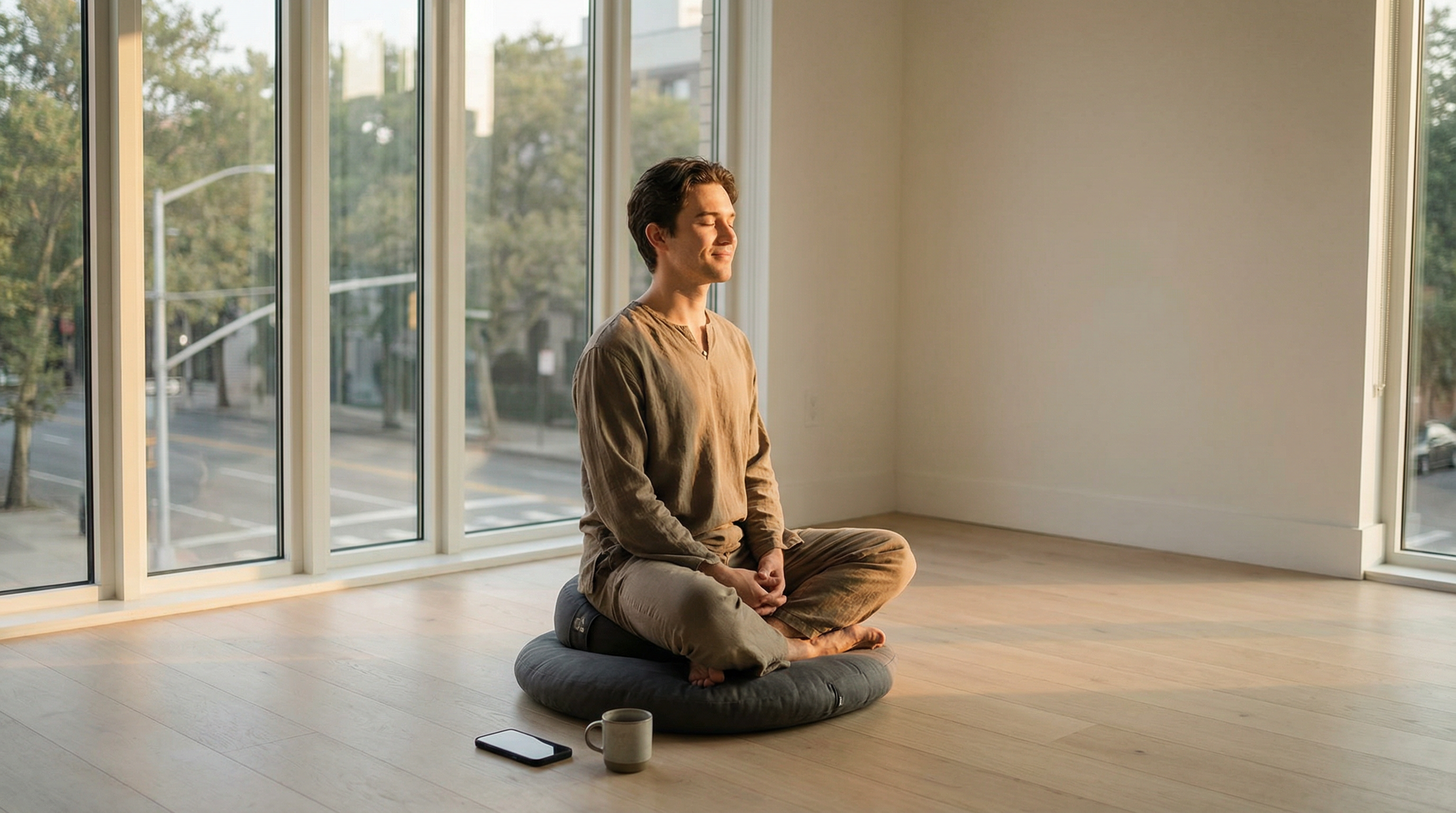
It’s easy to get caught up in the relentless pursuit of what’s next—the next goal, the next milestone, the next item on our to-do list. We’re so focused on striving that we often forget to appreciate what we already have. But what if the secret to a happier, healthier, and more fulfilling life isn’t about acquiring more, but about appreciating more? This is the power of a daily gratitude practice.
Cultivating gratitude is more than just saying “thank you.” It’s a profound shift in perspective, a conscious effort to notice and savor the good in our lives, no matter how small. The best part? It’s a skill you can build. With a little consistency, you can rewire your brain for positivity and resilience. And it doesn’t require hours of meditation or expensive retreats. In fact, you can start today with a simple, free tool you already have: your phone. The 3act app is designed to help you build habits that stick, making it the perfect companion for your journey into daily gratitude.
Ready to make accountability automatic? 3act is the free social habit tracker where your crew keeps you honest. Track habits, snap photo proof, and never fall off again. Download 3act free →
The Science of Gratitude: Why It’s More Than Just a Feeling
While gratitude has been a cornerstone of philosophical and spiritual traditions for centuries, modern science is now providing empirical evidence for its transformative effects. The research is clear: a regular gratitude practice can significantly improve both your mental and physical well-being.
Your Brain on Gratitude
Practicing gratitude is like a workout for your brain. Neuroscientists have found that it activates key areas of the brain associated with reward, moral cognition, and social bonding [1]. When you take a moment to feel thankful, your brain releases a cocktail of “feel-good” neurotransmitters like dopamine and serotonin, which elevate your mood and create a sense of contentment [2].
One of the most fascinating discoveries is that gratitude can lead to long-term structural changes in the brain. Studies have shown that individuals who regularly practice gratitude have increased gray matter volume in the prefrontal cortex, the area of the brain responsible for higher-order cognitive functions like decision-making and emotional regulation [3]. This suggests that gratitude doesn’t just make you feel good in the moment; it can fundamentally reshape your brain to be more resilient to stress and negativity.
The Ripple Effect on Your Well-being
The benefits of gratitude extend far beyond the brain. Research from institutions like UC Davis has consistently shown that people who practice gratitude experience a wide range of positive outcomes. In one study, participants who kept weekly gratitude journals reported fewer physical symptoms, exercised more regularly, and felt more optimistic about their lives compared to those who focused on hassles or neutral events [4].
Here’s a summary of the science-backed benefits:
| Category | Benefit |
|---|---|
| Mental Health | Reduced symptoms of depression and anxiety, increased happiness and life satisfaction. |
| Physical Health | Improved sleep quality, stronger immune system, and lower blood pressure. |
| Social Life | Increased feelings of connection, more prosocial behavior (like helping others), and stronger relationships. |
| Resilience | Enhanced ability to cope with stress and adversity. |
How to Start Your Daily Gratitude Practice
The beauty of a gratitude practice is its simplicity. You don’t need any special equipment or a lot of time. The key is consistency. Here are a few simple methods to get you started:
1. Keep a Gratitude Journal
This is the classic method, and for good reason. The act of writing down what you’re grateful for helps to solidify the thoughts and feelings. For a deep dive on how to get started, check out our post on how to start a journaling habit.
Don’t feel pressured to write pages and pages. You can start with the Two-Minute Rule: just commit to writing for two minutes each day. Simply list three to five things you’re grateful for. Be specific. Instead of “I’m grateful for my family,” try “I’m grateful for the way my partner made me laugh today.”
2. Use a Habit-Tracking App
In our digital age, your phone can be a powerful tool for building positive habits. Using an app like 3act can provide the structure and motivation you need to stay consistent. You can create a daily “Gratitude” action and get the satisfaction of tapping it complete each day. Watching your streak grow becomes a powerful motivator.
Ready to build a gratitude habit that sticks? 3act makes it easy to track your daily gratitude practice, share your progress with friends, and stay motivated with streaks and accountability. Download 3act for free and start today!
3. The “Three Good Things” Exercise
At the end of each day, take a few moments to reflect on three good things that happened. They don’t have to be monumental events. Maybe you enjoyed a delicious cup of coffee, had a pleasant conversation with a coworker, or saw a beautiful sunset. This simple exercise, developed by positive psychology pioneer Martin Seligman, has been shown to increase happiness and decrease depressive symptoms.
Making Gratitude a Lifelong Habit
Starting a gratitude practice is one thing; making it stick is another. The principles of habit formation are key here. As we discuss in our post on how long it takes to form a habit, consistency is more important than intensity. It’s better to practice gratitude for two minutes every day than for 30 minutes once a week.
This is where the power of accountability comes in. Sharing your gratitude practice with others can make a huge difference. In the 3act app, you can create a crew with friends or family. Share your gratitude entries in the group chat or simply let them see that you’ve completed your daily gratitude action. This social support system can provide the encouragement you need on days when you’re not feeling particularly grateful.
There are many habit tracking methods you can explore, but the most effective one is the one you can stick with. Whether it’s a physical journal, a simple note on your phone, or the structured system of an app like 3act, find what works for you and commit to it.
The Compound Effect of Daily Gratitude
Like any habit, the benefits of a daily gratitude practice compound over time. The small, consistent effort of noticing the good in your life each day builds on itself, leading to profound long-term changes. You’ll find that you naturally start to see the world through a more positive lens. You’ll become more resilient in the face of challenges and more appreciative of the people and experiences that make your life rich.
This isn’t just wishful thinking; it’s a neurological reality. By consistently activating the gratitude circuits in your brain, you strengthen them. Over time, a grateful disposition becomes your default state. This is the ultimate goal of a daily gratitude practice: to make gratitude not just something you do, but a part of who you are.
Frequently Asked Questions (FAQ)
How long does it take to feel the benefits of a gratitude practice?
While some people report feeling a shift in their mindset within a few days, research suggests that it can take a few weeks of consistent practice to experience significant and lasting benefits. The key is to be patient and persistent.
What if I don’t feel grateful?
It’s normal to have days when it feels difficult to find things to be grateful for. On these days, start small. Think about the basic necessities you have: a roof over your head, food to eat, clean water to drink. You can also be grateful for the simple fact that you are alive and breathing. The act of searching for things to be grateful for is a powerful exercise in itself.
Can I practice gratitude with others?
Absolutely! Sharing your gratitude with others can amplify its positive effects. You can make it a dinner table ritual with your family, start a gratitude circle with friends, or use the social features of an app like 3act to share your practice with your accountability crew.
Your Journey to a More Grateful Life Starts Now
A daily gratitude practice is one of the most powerful and accessible tools you have for improving your overall well-being. It costs nothing, takes only a few minutes a day, and the benefits are backed by a wealth of scientific research. By making a conscious effort to notice the good in your life, you can rewire your brain for happiness, build resilience, and cultivate a deeper appreciation for the world around you.
Ready to take the first step? Download the 3act app for free and start your daily gratitude practice today. With the right tools and a little consistency, you can unlock the transformative power of gratitude and change your life for the better.
References
[1] Fox, G. R., Shamay-Tsoory, S., Dwira, G., & Zak, P. J. (2015). The neuroscience of gratitude. In The Wiley Blackwell Handbook of Positive Psychological Interventions (pp. 139-152). Wiley-Blackwell.
[2] Zahn, J., et al. (2008). The neural basis of human social values: evidence from functional MRI. Cerebral Cortex, 19(2), 276-283.
[3] Zahn, J., et al. (2014). The neural basis of the lost-and-found of gratitude. Frontiers in Psychology, 5, 127.
[4] Emmons, R. A., & McCullough, M. E. (2003). Counting blessings versus burdens: An experimental investigation of gratitude and subjective well-being in daily life. Journal of Personality and Social Psychology, 84(2), 377–389.