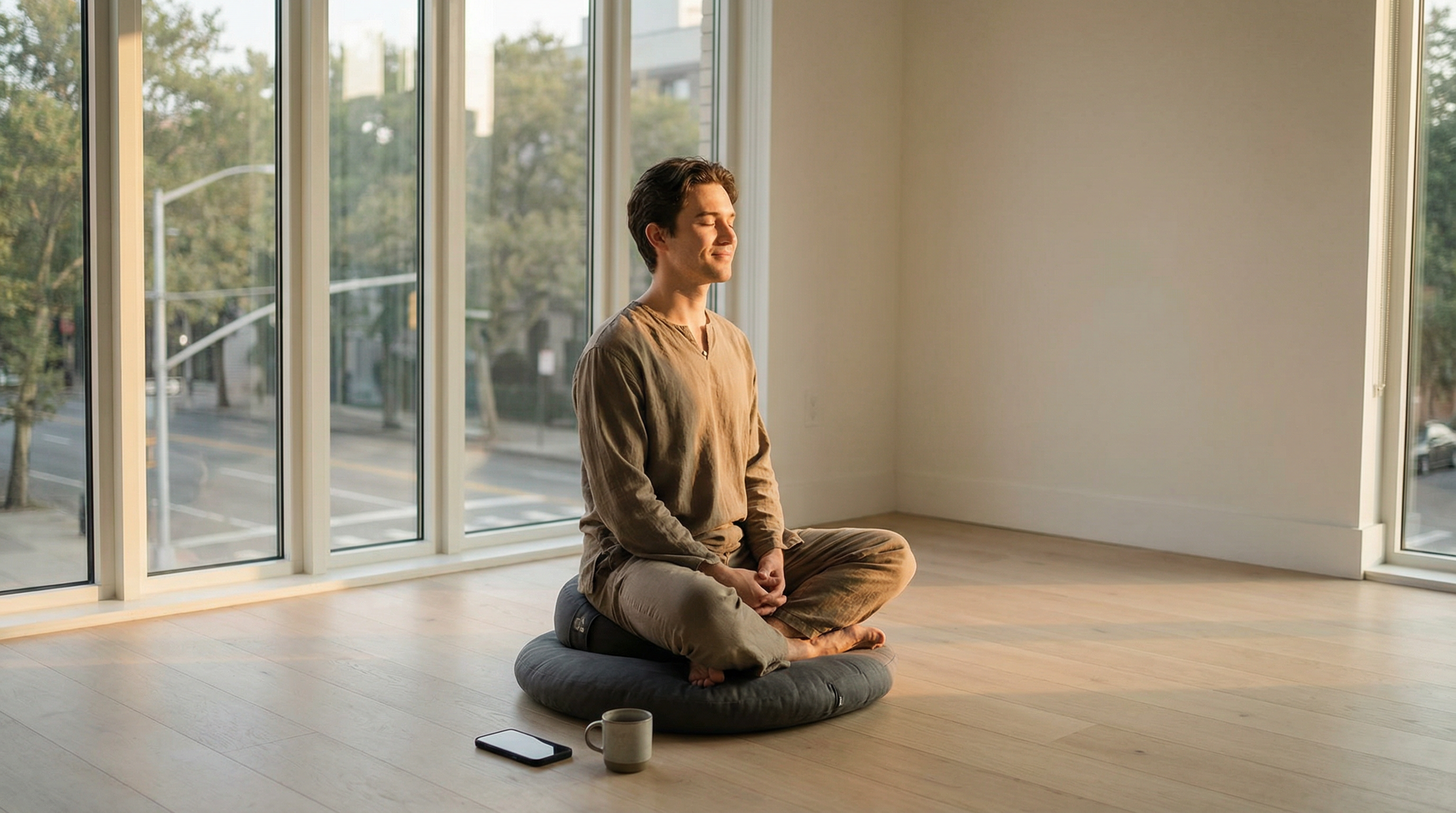
Have you ever felt like your mind is a runaway train, speeding through a thousand thoughts a minute, leaving you feeling overwhelmed, anxious, and disconnected from the present moment? You’ve probably heard about mindfulness as a potential solution, a way to calm the chaos and find a sense of peace. But when you try it, the silence feels deafening, your thoughts only get louder, and the idea of sitting still for even five minutes feels like an impossible task. You’re not alone in this struggle. Many people find the concept of mindfulness intimidating and the practice even more challenging, leading them to believe it’s just not for them. But what if there was a way to approach mindfulness that didn’t require you to empty your mind or sit in perfect silence for hours? What if you could build a sustainable mindfulness practice, one minute at a time, that fits seamlessly into your busy life and has profound, science-backed benefits for your brain and well-being?
This guide will demystify mindfulness, breaking it down into simple, actionable steps. We’ll explore the fascinating science behind how it reshapes your brain, introduce you to a variety of practices that go beyond traditional meditation, and provide practical strategies to overcome the common hurdles that get in the way. By the end, you’ll have a clear roadmap to build a daily mindfulness practice that not only sticks but also transforms your relationship with your mind and the world around you.
The Science Behind a Mindful Brain
Mindfulness is more than just a buzzword; it’s a powerful mental practice with a wealth of scientific evidence supporting its benefits. When you engage in mindfulness, you are actively reshaping your brain through a process called neuroplasticity. This is the brain’s remarkable ability to reorganize itself by forming new neural connections throughout life. Think of it as rewiring your brain for the better.
Strengthening Your Prefrontal Cortex
One of the key areas of the brain affected by mindfulness is the prefrontal cortex. This region, located at the front of your brain, is the hub of higher-order functions like decision-making, emotional regulation, and self-awareness. Research has shown that consistent mindfulness practice can lead to increased gray matter density in the prefrontal cortex [1]. A stronger prefrontal cortex means better impulse control, more thoughtful responses instead of knee-jerk reactions, and a greater capacity for empathy and understanding. Furthermore, mindfulness has been shown to decrease activity in the Default Mode Network (DMN), a network of brain regions that is active when our minds wander. A less active DMN is associated with less rumination and worry, and a greater ability to stay focused on the present moment [3].
Calming the Amygdala
The amygdala is the brain’s alarm system, responsible for the fight-or-flight response. In our modern world, this ancient survival mechanism can be easily triggered by everyday stressors, leading to chronic anxiety and stress. Mindfulness has been shown to reduce the size and activity of the amygdala [2]. This doesn’t mean you won’t feel stress anymore, but it does mean you’ll be less reactive to it. A calmer amygdala allows you to respond to challenging situations with more clarity and less emotional turmoil.
“Mindfulness is a way of befriending ourselves and our experience.” - Jon Kabat-Zinn
Mindfulness vs. Meditation: What’s the Difference?
Many people use the terms mindfulness and meditation interchangeably, but they are not the same thing. Meditation is a formal practice where you set aside a specific amount of time to focus your attention, often on your breath, a mantra, or a specific object. It’s like going to the gym for your mind.
Mindfulness, on the other hand, is the quality of awareness that you cultivate through meditation and can then apply to any moment of your life. It’s about being fully present and engaged in whatever you’re doing, whether it’s eating a meal, walking to work, or having a conversation. Meditation is the training; mindfulness is the way of life.
Beyond the Cushion: Mindfulness Practices for a Busy Life
If the thought of sitting in silent meditation doesn’t appeal to you, don’t worry. There are countless ways to practice mindfulness that don’t involve a cushion or a quiet room. Here are a few to get you started:
Mindful Eating
How often do you eat while scrolling through your phone, watching TV, or working at your desk? Mindful eating is the practice of bringing your full attention to the experience of eating. Notice the colors, textures, and smells of your food. Chew slowly and savor each bite. This not only enhances your enjoyment of food but also improves digestion and helps you recognize your body’s hunger and fullness cues more accurately.
Walking Meditation
Turn your daily walk into a mindfulness practice. Instead of listening to music or a podcast, bring your attention to the physical sensations of walking. Feel your feet on the ground, the movement of your legs, and the rhythm of your breath. Notice the sights, sounds, and smells of your environment. Walking meditation is a great way to connect with your body and the world around you.
Body Scan Meditation
A body scan is a simple yet powerful practice that involves bringing your attention to different parts of your body, one at a time. You can do this lying down, sitting, or even standing. Start by bringing your awareness to your toes, noticing any sensations without judgment. Slowly move your attention up through your body, to your feet, legs, torso, arms, and head. This practice helps you develop a greater awareness of your body and release physical tension.
Mindful Breathing
Your breath is a powerful anchor to the present moment, available to you at any time. Throughout your day, take a few moments to pause and bring your attention to your breath. Notice the sensation of the air entering your nostrils, filling your lungs, and then leaving your body. You don’t need to change your breath in any way; simply observe its natural rhythm. This simple practice can have a profound calming effect on your nervous system, helping to reduce stress and anxiety in the moment. You can try the 4-7-8 breathing technique: inhale for 4 seconds, hold your breath for 7 seconds, and exhale slowly for 8 seconds. This technique is particularly effective for calming a racing mind and preparing for sleep.
Mindful Commuting
Your daily commute, whether by car, train, or bus, can be a great opportunity for mindfulness. Instead of getting lost in thought or frustration, bring your attention to the present moment. Notice the sights and sounds outside your window. Feel the sensation of your hands on the steering wheel or your feet on the floor. A mindful commute can help you arrive at your destination feeling more centered and less stressed.
How to Start with Just One Minute a Day
The key to building a sustainable mindfulness practice is to start small. You don’t need to meditate for 30 minutes a day to experience the benefits. In fact, starting with just one minute can be incredibly effective. Here’s how:
- Choose a time and place. Pick a time of day when you can consistently spare one minute, whether it’s first thing in the morning, during your lunch break, or before you go to bed. Find a comfortable place where you won’t be disturbed.
- Set a timer for one minute.
- Bring your attention to your breath. Notice the sensation of your breath as it enters and leaves your body. When your mind wanders, as it inevitably will, gently guide your attention back to your breath.
- Be kind to yourself. Don’t judge yourself for having a busy mind. The goal is not to stop your thoughts, but to become more aware of them without getting carried away.
Once you’ve consistently practiced for one minute a day for a week, you can gradually increase the duration to two minutes, then five, and so on. The goal is to find a length of time that feels sustainable for you.
Overcoming Common Obstacles
As you begin your mindfulness journey, you may encounter some common obstacles. Here’s how to navigate them:
- Restlessness and Impatience: It’s normal to feel restless or impatient when you first start practicing. Instead of fighting these feelings, acknowledge them with kindness and gently bring your attention back to your breath.
- A Busy Mind: Your mind is a thought-generating machine. The goal of mindfulness is not to empty your mind, but to change your relationship with your thoughts. Observe your thoughts as they come and go, like clouds in the sky, without getting attached to them.
- Drowsiness: If you find yourself feeling drowsy during your practice, you can try sitting in a more upright posture, opening your eyes, or practicing at a different time of day when you’re more alert.
- Lack of Time: The beauty of mindfulness is that it can be practiced anywhere, anytime. You don’t need to set aside an hour a day. Start with just one minute, and find small pockets of time throughout your day to practice, such as while waiting in line, during your commute, or before a meeting.
- Feeling Like You’re ‘Doing It Wrong’: There is no right or wrong way to practice mindfulness. The goal is not to achieve a state of perfect bliss, but to simply be present with your experience, whatever it may be. Every time you notice your mind has wandered and you gently bring it back, you are strengthening your mindfulness muscle.
Tracking Your Practice with 3Act
Building a new habit, especially one as mentally demanding as mindfulness, can be challenging. For a deeper dive into the science of habit formation, check out our definitive guide on building new habits. This is where a tool like 3Act can make all the difference. By tracking your daily mindfulness practice in the app, you create a powerful feedback loop that reinforces your commitment. Seeing your progress, even if it’s just one minute a day, provides a sense of accomplishment and motivation to keep going. The app’s social accountability features are particularly helpful for a practice like mindfulness, which can often feel solitary. You can create a crew with friends in 3Act to share your journey and hold each other accountable. This shared experience can provide the encouragement and support you need to stay consistent, especially on days when you feel like skipping your practice. Knowing that your crew is there to cheer you on can be a powerful motivator. For those who enjoy meditation, you can also link this to your daily meditation habit. And for those looking to build a more structured routine, consider incorporating mindfulness into your morning routine.
Ready to Build Habits That Actually Stick?
3act is the free social habit tracker where your crew holds you accountable. Track your habits, share progress with friends, and never fall off again. With automatic accountability, streaks, XP, and a supportive crew by your side, your productive days start now. Download 3act free on the App Store →
References
[1] Hölzel, B. K., Carmody, J., Vangel, M., Congleton, C., Yerramsetti, S. M., Gard, T., & Lazar, S. W. (2011). Mindfulness practice leads to increases in regional brain gray matter density. Psychiatry Research: Neuroimaging, 191(1), 36–43.
[2] Taren, A. A., Creswell, J. D., & Gianaros, P. J. (2013). Dispositional mindfulness co-varies with smaller amygdala volume in community adults. PloS one, 8(5), e64574.
[3] Brewer, J. A., Worhunsky, P. D., Gray, J. R., Tang, Y. Y., Weber, J., & Kober, H. (2011). Meditation experience is associated with differences in default mode network activity and connectivity. Proceedings of the National Academy of Sciences, 108(50), 20254-20259.