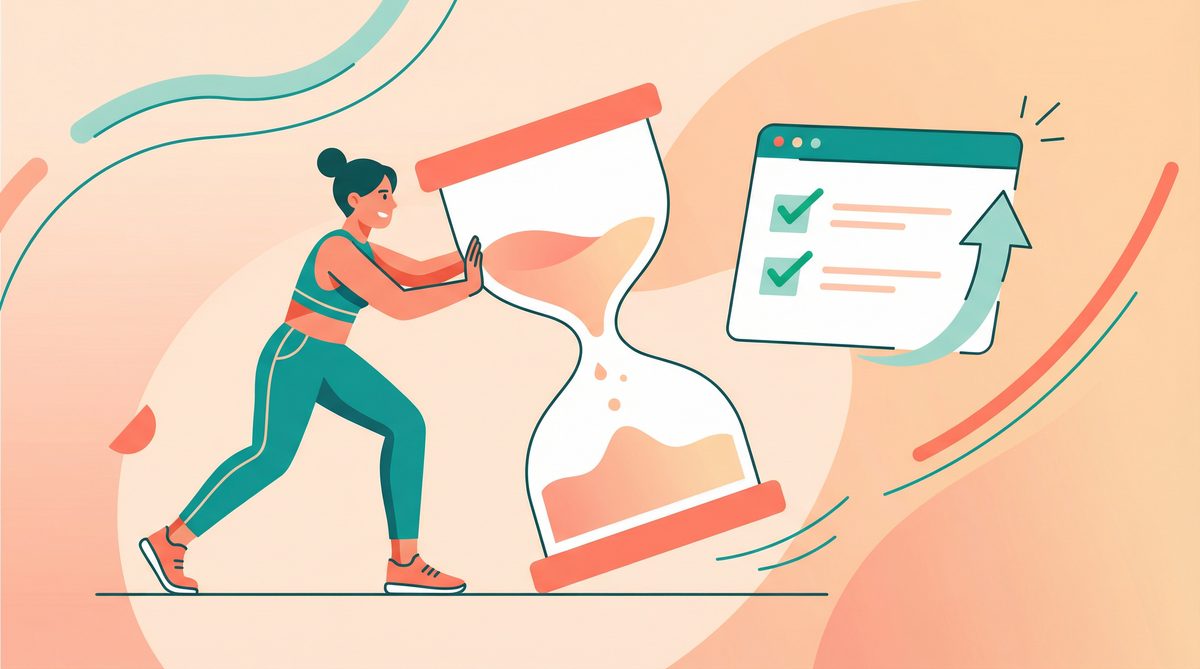
You’ve felt it before. A surge of motivation, a clear vision of a better self. You declare, “Starting tomorrow, I will exercise every day.” Or maybe it’s “I’ll finally learn that language,” or “I’m going to wake up at 5 AM.” For a few days, you’re unstoppable. Then, life happens. A late night at work, a rainy morning, a simple lack of energy—and the new habit crumbles.
Why does this pattern repeat itself? It’s not a moral failing or a lack of willpower. It’s a failure of strategy. Building a new habit is not an act of brute force; it’s a science and a skill. It requires understanding the machinery in your brain and leveraging proven systems to make change not just possible, but inevitable.
This is the definitive guide to building a habit that actually sticks. We will move beyond platitudes and dive deep into the science of habit formation, explore practical, step-by-step frameworks you can apply immediately, and reveal the two missing ingredients that separate fleeting attempts from lifelong change: tracking and accountability.
The Science of How Habits Work
To change a habit, you must first understand it. Habits are, at their core, the brain’s way of saving energy. They are automated behaviors that allow you to navigate life without constantly making decisions. As journalist Charles Duhigg explained in his seminal book, The Power of Habit, this process can be broken down into a simple neurological loop. [1]
The Habit Loop consists of three components:
- The Cue: This is the trigger that tells your brain to go into automatic mode and which habit to use. It could be a time of day (7:00 AM), a location (the kitchen), an emotional state (boredom), or the preceding action (finishing a meal).
- The Routine: This is the behavior itself—the physical, mental, or emotional action you take. It’s the habit you want to change or build, like scrolling through social media, grabbing a snack, or lacing up your running shoes.
- The Reward: This is the positive reinforcement that tells your brain, “Hey, this loop is worth remembering for the future.” The reward satisfies the craving initiated by the cue and solidifies the habit.
Consider the simple habit of a morning coffee. The cue might be waking up. The routine is to walk to the kitchen, grind the beans, and brew the coffee. The reward is the rich aroma, the warmth of the mug, and the caffeine boost that makes you feel alert and ready for the day. Your brain links these elements together until the act becomes automatic.
How Long Does It Really Take to Build a Habit?
You’ve likely heard the popular myth that it takes 21 days to form a new habit. This figure is a misinterpretation of research from the 1950s and has been widely debunked. For a deeper dive, read our guide on how long it really takes to form a habit. The reality is more nuanced.
A 2009 study published in the European Journal of Social Psychology by Phillippa Lally and her research team provides a much more realistic timeline. They found that, on average, it takes 66 days for a new behavior to become automatic. [2] However, the range in the study was vast, from as little as 18 days to as long as 254 days. The key takeaway is not the specific number, but the underlying principle: consistency is more important than speed.
Don’t be discouraged if you’re on day 22 and your new habit doesn’t feel automatic yet. You’re not failing; you’re in the middle of the process. Keep showing up, and trust that the neurological pathways are being paved.
Proven Frameworks for Building Habits That Stick
Understanding the science is the first step. Now, let’s translate that knowledge into action with proven, practical frameworks.
Start Small: The 2-Minute Rule
The biggest mistake people make when starting a new habit is making it too big. We try to go from zero to hero overnight. The 2-Minute Rule, popularized by James Clear in Atomic Habits, is the antidote to this. [3]
The rule is simple: When you start a new habit, it should take less than two minutes to do.
- “Read every day” becomes “Read one page.”
- “Run three miles” becomes “Put on my running shoes and step out the door.”
- “Meditate for 20 minutes” becomes “Sit down and meditate for one minute.”
The goal isn’t to get results in those two minutes. The goal is to master the art of showing up. By making the starting ritual incredibly easy, you reduce the friction and make it nearly impossible to say no. Once you’ve started, it’s much easier to continue. You might just read one page, or you might read for an hour. Either way, you’ve reinforced your new identity as a “reader.”
Link Your Habits: The Power of Habit Stacking
Another powerful strategy is to anchor your new habit to an existing one. This is called habit stacking, and it uses the momentum of a well-established routine to carry a new one.
The formula is:
After [CURRENT HABIT], I will [NEW HABIT].
For example:
- “After I pour my morning cup of coffee, I will journal for one minute.”
- “After I take off my work shoes, I will immediately change into my gym clothes.”
- “After I brush my teeth at night, I will floss one tooth.”
Habit stacking works because your existing habits are already hardwired into your brain. The cue is built-in. By linking the new behavior to this established pattern, you don’t need to rely on motivation or reminders to get it done.
Plan for Success: Implementation Intentions
An implementation intention is a specific plan you make beforehand about when and where you will act. It removes the ambiguity that so often leads to inaction. Pioneered by psychologist Peter Gollwitzer, research has shown that this simple technique can dramatically increase the odds of you following through on a goal. [4]
An implementation intention is a specific plan you make beforehand about when and where you will act. It removes the ambiguity that so often leads to inaction. For a deeper dive, read our guide on how to stop procrastinating.
The formula is:
I will [BEHAVIOR] at [TIME] in [LOCATION].
For example:
- “I will go for a 30-minute run at 7:00 AM in the park near my house.”
- “I will practice my presentation for 15 minutes at 12:30 PM in the empty conference room.”
This is far more powerful than a vague goal like “I’ll run more.” It forces you to think through the logistics and pre-decide what you’re going to do. When the time and place arrive, you don’t have to think or debate—you just execute the plan.
The Missing Ingredients: Tracking and Accountability
Frameworks are powerful, but on their own, they are often not enough. The journey from starting a habit to making it a permanent part of your life is where most people fall off. This is where the two most critical, and often overlooked, components come into play: tracking and accountability.
If You Don’t Track It, You Can’t Improve It
Habit tracking is the simple act of measuring whether you did a habit. This small action has three powerful psychological benefits:
- It creates a visual cue. The tracker itself reminds you to act.
- It’s motivating. Seeing your streak grow creates a sense of progress and makes you not want to “break the chain.”
- It provides immediate satisfaction. Checking off an item on your to-do list feels good and provides a small reward for your efforts.
Tracking your Actions, Cycles (recurring habits), and other metrics is a core part of the 3act system. It provides a clear, objective record of your efforts, turning vague intentions into concrete data. This is how you build momentum and prove to yourself that you are becoming the person you want to be. 3act is a FREE app that helps you with this.
Alone, You’ll Quit. Together, You Won’t.
This is the ultimate differentiator. You can have the best frameworks and the most detailed tracking, but without accountability, it’s still too easy to quit when things get hard. True accountability is the secret weapon for making habits stick for good. For a deeper dive, read our guide on what an accountability partner is and why you need one.
This isn’t about shame or judgment. It’s about creating a social contract that raises the stakes. When you know someone else is watching—a friend, a mentor, or a partner—you are far more likely to follow through.
This is the foundational principle of 3act. We built an entire system around automatic social accountability. Everything you do—or don’t do—is automatically posted to a feed for your chosen Crew or Accountability Partner to see. There’s no hiding. If you skip your morning workout, your partner knows. If you complete your daily reading, your crew sees your win.
This isn’t about seeking external validation. It’s about leveraging a fundamental aspect of human nature: we are social creatures who are deeply influenced by our community. When you make your goals public, you create a powerful force that pulls you toward success.
Ready to stop the cycle of starting and quitting? It’s time to add real accountability to your habit-building arsenal. Download 3act for FREE from the App Store and invite a friend to be your partner. It’s the single most effective step you can take to ensure you stick with your goals.
Your Step-by-Step Plan for a New Habit
Let’s put it all together. Here is your actionable plan:
- Choose One Habit. Don’t try to change everything at once. Start with one keystone habit that will have a ripple effect on your life. For a deeper dive, read our guide on how to find an accountability partner.
- Apply the 2-Minute Rule. Scale your chosen habit down to its smallest possible version. What can you do in under two minutes that gets the process started?
- Create an Implementation Intention. Decide on the exact time and location you will perform your two-minute habit. Be specific.
- Use Habit Stacking. Link your new two-minute habit to a routine you already do every day without fail.
- Track Everything. Whether you use a notebook or an app, track your habit every single day. Don’t break the chain.
- Get an Accountability Partner. This is the game-changer. Find someone you trust and share your goal with them. Better yet, invite them to a Crew on 3act so they can see your progress automatically.
Building a new habit is a journey, not a sprint. There will be days when you fail. The key is to get back on track as quickly as possible. With the right systems, a deep understanding of the science, and the unwavering support of an accountability partner, you can move beyond the cycle of failed resolutions and finally build a life of intention and discipline. Productive days are made easy when you don’t have to do it alone.
Ready to Build Habits That Actually Stick?
3act is the free social habit tracker where your crew holds you accountable. Track your habits, share progress with friends, and never fall off again. With automatic accountability, streaks, XP, and a supportive crew by your side, your productive days start now.
Download 3act free on the App Store →
References:
[1] Duhigg, Charles. The Power of Habit: Why We Do What We Do in Life and Business. Random House, 2012.
[2] Lally, P., van Jaarsveld, C. H. M., Potts, H. W. W., & Wardle, J. (2010). How are habits formed: Modelling habit formation in the real world. European Journal of Social Psychology, 40(6), 998–1009.
[3] Clear, James. Atomic Habits: An Easy & Proven Way to Build Good Habits & Break Bad Ones. Avery, 2018.
[4] Gollwitzer, P. M. (1999). Implementation intentions: Strong effects of simple plans. American Psychologist, 54(7), 493–503.