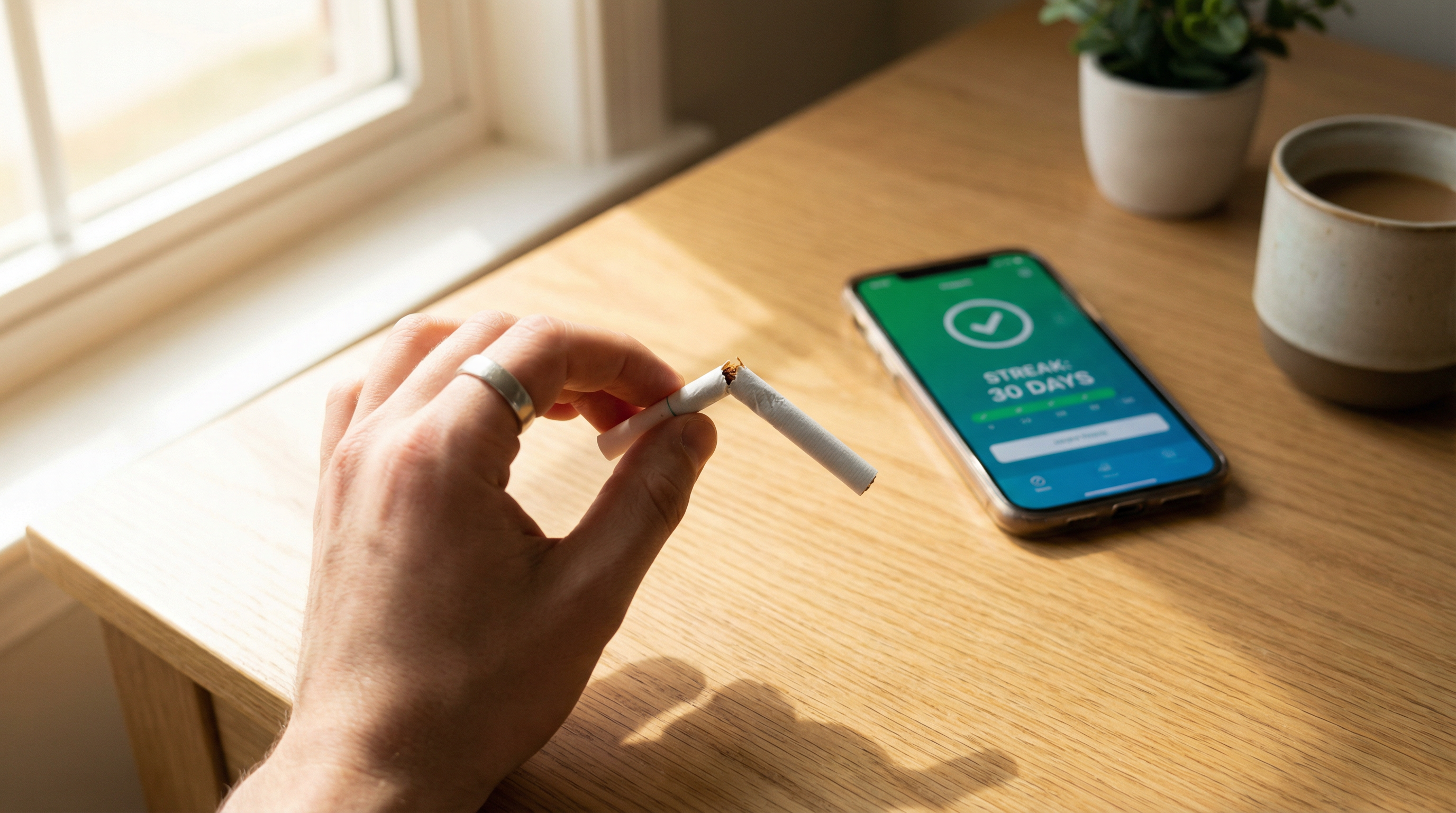
Have you ever thought about drinking less? You’re not alone. A growing wave of people are becoming “sober curious,” choosing to reduce their alcohol intake for better health, sharper focus, and improved well-being. But changing a habit as ingrained as drinking can be tough to do on your own. That’s where a quit drinking accountability partner comes in—a trusted ally dedicated to helping you stay on track.
This isn’t about a rigid, all-or-nothing approach. It’s about mindful drinking and making conscious choices that align with your goals. Whether you want to stick to a certain number of drinks per week, have more alcohol-free days, or simply be more present, having someone in your corner makes all the difference. For a seamless way to track your progress and connect with your support system, consider the 3act app, a free social habit tracker designed to make accountability a core part of your journey.
Ready to make accountability automatic? 3act is the free social habit tracker where your crew keeps you honest. Track habits, snap photo proof, and never fall off again. Download 3act free →
The Rise of the Sober Curious Movement
The cultural conversation around alcohol is shifting. Once seen as a default social lubricant, more people are now questioning its role in their lives. The “sober curious” movement has gained significant traction, with nearly half (49%) of Americans planning to drink less in 2025 [1]. This trend is particularly strong among younger generations, with 36% of Gen Z choosing to go alcohol-free for their mental health [2].
The reasons for this shift are varied and personal. For many, it’s about physical health. For others, it’s about improving mental clarity, sleeping better, and saving money. This isn’t about demonizing alcohol but rather empowering individuals to build a healthier, more intentional relationship with it. The goal is moderation and mindfulness, not necessarily total abstinence.
Why Willpower Alone Often Isn’t Enough
If you’ve ever tried to change a long-standing habit, you know that sheer willpower can feel like a finite resource. This is especially true for drinking, which is often deeply woven into our social lives and routines. You might start with strong motivation, but a stressful day or a social gathering can easily derail your progress. This is a common experience, and it highlights why you can’t just stick to habits on willpower alone.
Research shows that a significant number of individuals who attempt to stop drinking relapse. Roughly two-thirds of people treated for an alcohol use disorder will relapse within the first six months [3]. While cutting back is different from treating a disorder, the statistic underscores the difficulty of changing drinking patterns without a robust support system. Building self-discipline is a process, and external support structures are a critical component of that process.
Your Sober Sidekick: The Power of an Accountability Partner
This is where a sober accountability partner becomes a game-changer. This is someone you check in with regularly, who knows your goals, and who provides encouragement without judgment. They are not a therapist or a sponsor in the traditional sense, but a peer who is on a similar journey or is committed to supporting yours.
The impact of social support on recovery and habit change is well-documented. Studies consistently show that having a strong support network leads to better outcomes and a higher likelihood of success [4]. In fact, some reports indicate that success rates can increase dramatically for those who engage with an accountability partner, with some sources suggesting a rise to 95% with regular check-ins [5]. This person provides the external motivation and positive reinforcement needed to bridge the gap when internal motivation fades.
Finding the right person is key. It could be a trusted friend, a family member, or a gym partner. The most important thing is that they are reliable, supportive, and understand your “why.” If you’re not sure where to start, our guide on how to find an accountability partner can help.
Ready to team up? The 3act app lets you form private crews with your friends, creating a dedicated space to share your progress and celebrate your wins together.
Shifting Your Identity and Tracking Your Progress
One of the most powerful ways to make a new habit stick is to make it part of your identity. Instead of thinking “I’m a person who is trying not to drink,” you start to see yourself as “I am a mindful drinker” or “I am a person who prioritizes my health.” This concept of identity-based habits reframes your goal from a chore into a reflection of who you are.
Tracking your progress is essential for reinforcing this new identity. Every day you successfully avoid alcohol is a vote for the person you want to become. Seeing a streak of alcohol-free days grow provides a powerful visual representation of your commitment and success. It takes time for this new behavior to become automatic, and understanding how long it takes to form a habit can help you set realistic expectations for the journey.
How to Use 3act with Your Quit Drinking Accountability Partner
The 3act app is perfectly designed to support your journey toward mindful drinking with an accountability partner. Here’s how you can leverage its features:
- Create Your Action: Set up a daily habit like “Alcohol-Free Day” or “Stick to Drink Limit.” Tapping it complete each day builds your streak and provides a satisfying sense of accomplishment.
- Track Your Streak: The app visually tracks your consistency. Your streak becomes a powerful motivator, and you won’t want to break it. Your accountability partner can see your streak and cheer you on.
- Capture Photo Proof: This feature is perfect for accountability. Snap a picture of your sparkling water, your evening tea, or the book you’re reading instead of having a drink. It’s a simple, effective way to show you’re staying on track.
- Form an Accountability Crew: Invite your accountability partner (or a small group of friends) to a private crew. You can chat, react to each other’s progress, and offer support when someone is struggling.
- Share Your Wins: Celebrate milestones by sharing your 3act Circle—a beautiful visualization of your consistency—to your social media or directly with your partner.
Frequently Asked Questions (FAQ)
What is the difference between a sponsor and a sober accountability partner?
A sponsor is typically part of a formal 12-step program like Alcoholics Anonymous. They are usually someone who has been sober for a significant amount of time and guides a newcomer through the steps. A sober accountability partner is a more informal, peer-based relationship focused on mutual support for specific goals, such as cutting back on drinking rather than complete abstinence.
How often should I check in with my accountability partner?
Consistency is key. Daily check-ins are often the most effective, especially in the beginning. It can be a simple text message, a quick call, or a check-in through the 3act app. The goal is to make accountability a regular part of your routine.
What if I slip up and have a drink?
It’s important to approach slip-ups with self-compassion, not shame. A single drink doesn’t erase all your progress. The most important step is to be honest with your accountability partner, reflect on what triggered the slip-up, and get back on track the next day. A good partner will offer support, not judgment.
Your Journey to Mindful Drinking Starts Now
Deciding to cut back on drinking is a powerful choice for your physical and mental health. While the path has its challenges, you don’t have to walk it alone. By teaming up with a sober accountability partner and using a tool like 3act, you create a robust support system designed for success.
You have the power to change your habits and build a healthier relationship with alcohol. It starts with a single decision, a supportive friend, and the right tools to keep you moving forward.
Ready to take the first step? Download 3act for free on the App Store and start building your accountability crew today!
References
[1] The Educated Patient. (2025, January 21). The Rise of the Sober Curious Movement. [2] Circana. (2025, January 21). Alcohol Statistics 2025 – Sober Curious Nation & Beverage Survey. [3] American Addiction Centers. (2025, March 27). Alcohol Relapse and Recovery Statistics. [4] Lookatch, S. J., et al. (2019). Effects of social support and 12-Step involvement on recovery. PMC. [5] Leora B. (2025, January 5). The Role of Accountability Partners in Addiction Recovery.